
Katrana Kafe Xxx Vodes Apr 2026
Around me, people navigated grief and joy with the same cautious grace. An old man traced the rim of his cup and hummed the tune of a war long past. Two strangers argued affectionately over the correct pronunciation of a foreign pastry. A child fell asleep, drooling slightly on a napkin, and the barista covered her with a napkin and a smile. There was an economy of tenderness in Katrana Kafe: small mercies traded like currency.
When I left Katrana Kafe, the rain had stopped and the city was washed clean. My coat smelled faintly of cardamom and something older, like a memory you can’t name. I tucked the notebook I’d taken—no one asked for it back—into my bag. Inside were sketches, a pressed ticket, and a note that read: “Stay for the music; leave when you’re ready.” Katrana Kafe Xxx Vodes
The menu listed impossible things in warm, careful handwriting: “Midnight Pour-over,” “Memory Espresso,” “Two AM Solace.” I asked for all of them, because there was a weight behind my ribs I didn’t want to shoulder alone. The first sip tasted like the city at three in the morning—the honest, ragged parts of it. The second tasted like a photograph you’d lost and found folded into a jacket. The third tasted like forgiveness—soft and complicated, a thing that doesn’t arrive all at once. Around me, people navigated grief and joy with
The back of the cafe opened into a narrow corridor lined with photographs: strangers, lovers, lost pets, places whose names had fallen out of favor. Each frame was labeled with a single word—“Later,” “Soon,” “Once.” I stood before one marked “Remember,” and the face in the photograph was mine at thirteen, laughing with reckless certainty. For a breath I was that child again; for a breath more I was not. The cafe didn’t force a choice. It simply offered the memory and let me decide what to do with it. A child fell asleep, drooling slightly on a
If you find yourself wandering on a wet evening and the city seems heavy with its own stories, look for the alley with steam. The sign might be gone tomorrow. The song might not play the same way twice. But if you are lucky, the bell will still ring, and the hands behind the counter will pour something warm and honest and quietly revolutionary.
They told me stories about Katrana Kafe—whispers caught between cups: that its coffee could untangle regrets, that its jukebox played songs no one else remembered, that at certain hours a thin seam of another time opened at the back of the room. None of those stories prepared me for the waitress who took my order: a woman with ink-black hair and eyes like a well-read map. She wrote my name in a notebook whose pages were the color of dusk and left me with a cup that steamed with its own small gravity.
As the night deepened, the lights dimmed further and a hush settled in. Patrons became characters in a play where every role had been written by someone else’s longing. The jukebox—an ancient, stoic presence—shifted, and the notes it produced seemed to lift dust motes into slow choreography. In that music I glimpsed pieces of people I’d known and moments I hadn’t yet lived: a leaving, an embrace, a secret kept because it felt kinder that way.

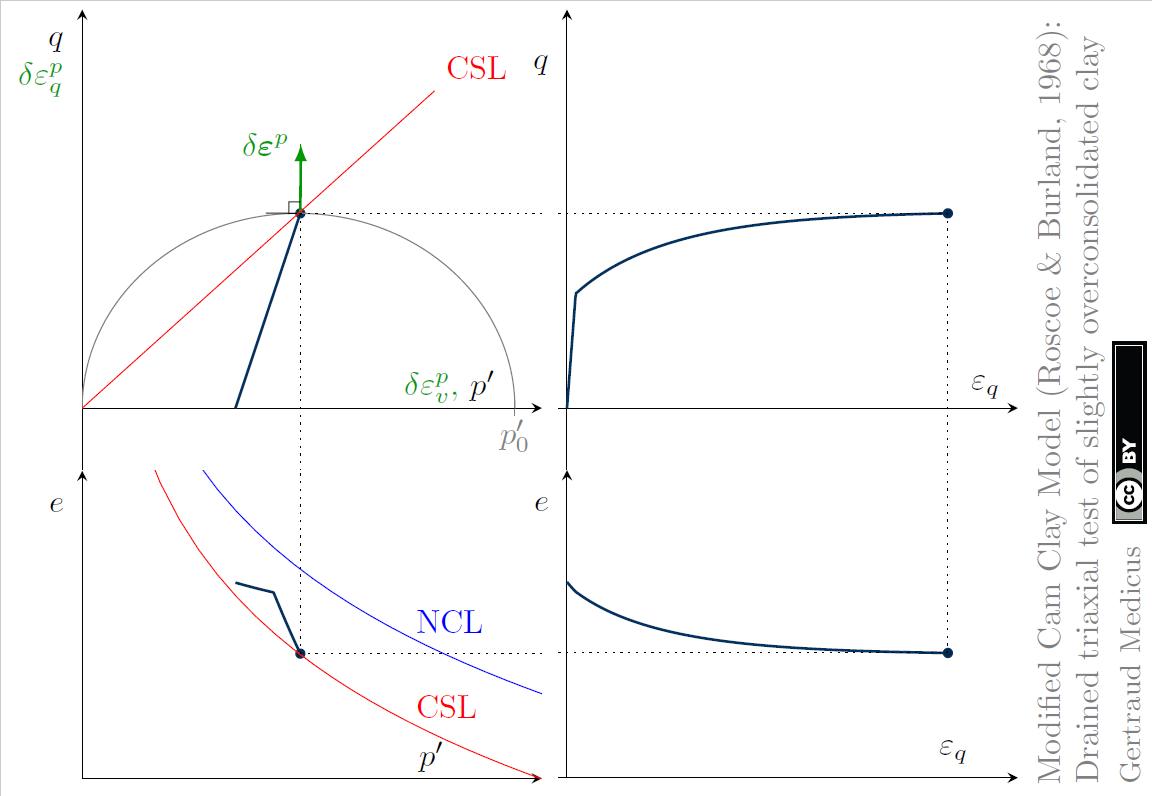
Hola, muy buen post. Me sirvió mucho. Eso si, creo que hayun pequeño error de tipeo:
“Contractivos (Δu>1): Tienden a consolidar. Se da en suelos sueltos y arcillas normalmente consolidadas (NC).
Dilatante (Δu0y Δu<0 cierto??
Gracias
Hola, Esteban
Me alegro que te haya servido. En este caso no hay un error, en los suelos contractivos, cuando se ejerce la carga aumentan las presiones de poro. Al revés con los dilatantes.
Saludos.
Creo que se refiere a que en la imagen el valor critico para la dilatancia o contraccion es el 0 y luego en el texto es 1.
Eso si, muy buen post, simple dentro de lo complejo.
Hola, Benjamin.
Es cierto que se contradice. Lo reviso, gracias!
Buenos días,
Como se determinan las presiones de cámara en un ensayo triaxial CD, cuando de van a ensayar las 3 probetas? Cual es proporción de incremento adecuada entre cada una de esas presiones? Gracias
Hola, pues eso depende de tu proyecto.
Hay que preguntarse en qué condiciones estará sometido el suelo durante la construcción y la puesta en servicio.
Normalmente la primera es la actualmente tiene in situ, en función de su profundidad. La tercera sería las condiciones de servicio, por ejemplo, cuando construyamos la presa o el terraplen, o entre en carga la cimentación. La segunda, pues uno intermedio.
Saludos.
Ignacio
Gracias amigo. Solo me ha quedado una duda con el ensayo UU. En el blog mencionas que debe saturarse primero. Me parece que esa no es una condición estrictamente valida, ya que se entiende que el ensayo rápido no da tiempo para que el material sature, como ejemplo puede ser el realizar el ensayo UU y representar que sucederia si estas construyendo un dique y necesitas saber las condiciones de estabilidad. Sin embargo, el saturar la muestra, y luego ensayarla te podria dar valores menores de parámetros de resistencia cortante y utilizar ello para tu análisis y ser conservador. Yo considero que antes de realizar un ensayo es importante comprender como se va comportar el suelo y en función a ello desarrollar el análisis. Muchas gracias por tu blog, me he tomado el tiempo de leer, me quedan algunos pasos por profundizar pero muy bueno.
Martin, es necesario saturar el material de lo contrario va a haber efectos de succión que no pueden ser medidos y no es posible generar el analisis de esfuerzos efectivos que se necesita para determinar los valores de resistencia.
Hola Nacho, para mi este ensayo es muy importante y hay cosas que se hacen por costumbre pero que se pueden cambiar a mejor. Me explico, la presión de poro, por ejemplo, siempre se puede medir en la célula triaxial tanto si se hace un ensayo UU, como uno CD, el asunto radica en configurar el equipo y los sensores convenientemente.
Para mí, si cuando se hace un triaxial se le diera al cliente los datos de los sensores además de las curvas de rotura, el cliente podría comprobar si el ensayo realmente es UU o CD ya que muchas veces la elección de velocidades de rotura no son correctas, la nuestra drena mal por lo que sea, etc.
En resumen, este ensayo tan importante debe realizarse por técnicos especializados tanto en laboratorio, como en cálculo de resultados.
La formación es muy importante!!!