C64 SID music
Amiga MOD music
How to get rid of roaches
How to kill bedbugs
Cannabis in Canada (German)
Read my blog
YouTube channel
Contact

Fisherman Ft Dj Tira And Big Nuz Happy Song Acapella Free | Dj

Conclusion That compact search-query-like string—“dj fisherman ft dj tira and big nuz happy song acapella free”—is a microcosm of contemporary music culture. It gestures to collaboration, to the creative possibilities unlocked when voices are unmoored from their original instrumentation, and to the tensions between open sharing and ethical compensation. In the acapella’s exposed voice we find both the raw material for new futures and a reminder: every free file carries the imprint of human labor, place, and history—and with that imprint comes responsibility.

At first glance, the phrase reads like a digital breadcrumb trail: a DJ credit, a featured township of artists, a song title, a format tag, and the alluring word “free.” It captures a modern music ecosystem where creativity, commerce, fan culture, and the internet collide. Unpacking that string reveals a story about collaboration, remix culture, cultural identity, and the promises—and perils—of freely circulating stems and acapellas in the streaming age. 1. Collaboration as Cultural Conversation “DJ Fisherman ft. DJ Tira and Big Nuz” signals an intergenerational handshake. DJ Tira and Big Nuz are associated with South African gqom and kwaito/masculine township sounds—music rooted in community rhythms and local dance floors. A DJ like “Fisherman” stepping in as host or remixer suggests that tracks are living things: they travel, are reinterpreted, and become sites for dialogue between artists and audiences. Featuring credits also announce lineage and respect; they map influence and invite listeners to situate the song within a musical family tree. 2. The Power of the Acapella Labeling something “acapella” reframes the piece from a finished product into raw material. An acapella strips away instrumentation to center the voice—lyrics, cadence, emotion—making it a blueprint for new creations. For producers and DJs, an acapella is an open door: overlay a new rhythm, warp the tempo, fold it into a mashup, or place it over ambient textures to alter mood and meaning. For fans, hearing an acapella can illuminate nuances of phrasing and dialect otherwise buried in a dense mix. The vocal becomes a stand-alone testimony. 3. “Free” as Invitation and Tension The promise of “free” acapellas circulates abundance: democratized access for bedroom producers, DJs, and remixers hungry to experiment. It accelerates cultural exchange—someone in Durban, Lagos, or Los Angeles can rework a vocal into something resonant for entirely different communities. Yet “free” also surfaces complex ethical terrain: attribution, royalties, and the livelihood of artists. When creative assets circulate without clear licensing, the line between promotion, homage, and exploitation blurs. The word “free” thus sits uneasily between generosity and the precarious economics of modern music. 4. Remix Culture and Authorship Remix culture reframes authorship as collaborative and iterative. An acapella release encourages participatory creativity: listeners become co-creators. In scenes where DJs are curators and producers are translators, a vocal thread woven into multiple reinterpretations forms a communal tapestry rather than a single artifact. Each iteration tells a new story while echoing its source—an artistic palimpsest where the original remains legible but not sacrosanct. 5. Identity, Language, and Place A track featuring artists like DJ Tira and Big Nuz carries linguistic and geographic identity. Township slang, local idioms, and rhythmic cadences encode place-based knowledge. When an acapella is exported into global remix chains, those markers often shift—some preserved, some translated, some lost. Attentive producers can amplify cultural specificity rather than erase it, creating cross-cultural works that respect origin rather than flatten it. 6. Listening as an Act of Interpretation An acapella invites concentrated listening. Without instrumental distraction, the listener is compelled to attend to breath, timing, inflection, and subtext. Lines that seemed incidental may reveal autobiographical flashes, humor, or coded messages. In this way, an acapella becomes pedagogical: it trains ears to hear the scaffolding of performance and the fine-grained decisions that make a vocal performance memorable. 7. The Future: Ethical Sharing and Creative Commons If freeing acapellas is to be an ethical practice, it requires new norms: clear attribution, optional licensing that allows remixing while protecting future earnings, and mechanisms for community benefit. Platforms and artists experimenting with tiered permissions—encouraging transformative works while safeguarding rights—could preserve the creative vitality of “free” resources without undercutting artists’ livelihoods. dj fisherman ft dj tira and big nuz happy song acapella free
Legal mentions

You are not allowed to distribute MAME in any form if you sell, advertise, or publicize illegal CD-ROMs or other media containing ROM images. This restriction applies even if you don't make money, directly or indirectly, from those activities. You are allowed to make ROMs and MAME available for download on the same website, but only if you warn users about the ROMs's copyright status, and make it clear that users must not download ROMs unless they are legally entitled to do so.
If you really like playing these games then you might like the authentic feeling that playing on an arcade machine can bring that can't be reproduced on your PC. Standing at the cabinet, using the microswitch joystick and buttons, looking at the arcade monitor. Nothing beats this.

You can actually build your own, using woodworking skills or you can buy from companies the various parts that you need, like the marquees that display the name of the game to the sideart that is displayed on the side. These cabinets can contain either an original Jamma harness (for attaching real arcade boards) or a computer so you can run MAME on the cabinet. But then there are retro consoles and cabinets...

Some games need audio samples. The games will run without samples but then miss certain or all sounds. Samples are kept in another directory than the roms-images. Keep that in mind because otherwise you might overwrite a rom-image with its sample.

Attention: Most roms here are outdated by now, and I have no source to update them. So a lot of the might not work with up to date MAME versions. Sorry for that.

If you use an adblocker in some cases you won't be able to download any of the files. Please consider to deactivate your adblocker and refresh this page to be able to enjoy retro arcade games.

Below you find my favorite game image files for download. But if you are looking for a complete romset you're in the wrong place. These file dumps are of version 0.260 from a full split rom set; all games should thus be self contained.

Sorted by year

NameYearScreenshot
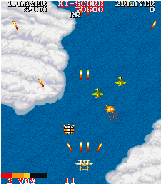
194119901941
194219841942
194319871943
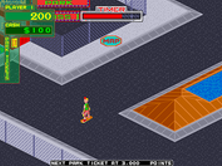
720 Degrees1986720 Degrees
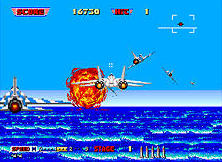
Afterburner II1987Afterburner II
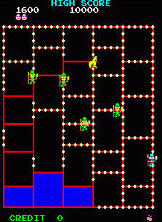
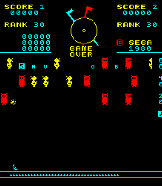
Amidar1982Amidar
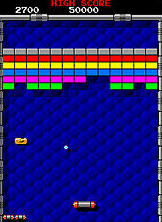
Arkanoid1986Arkanoid
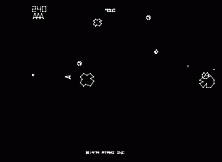
Asteroids1979Asteroids
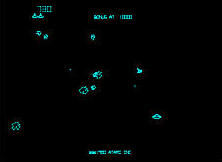
Asteroids De Luxe1980Asteroids De Luxe
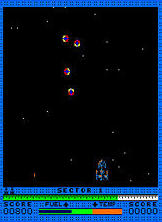
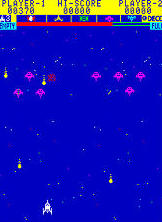
Astro Blaster  (you might want an external sample file)1981Astroblaster
Astro Fighter  (you might want an external sample file)1980Astro Fighter
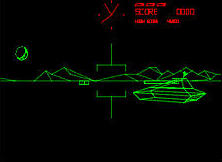
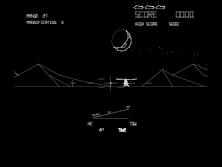
Battle Zone1980Battlezone

What are these files?

Files here are mostly original dumps (split MAME roms to download; create a merged set yourself, or look elsewhere) of hardware chips from those machines found in arcades in the late 70s through the 80s, with most being considered abandonware. My personal collection on this web page focuses on the golden era from around 1978 to 1989. The newest game here is from 1997 with only a few more files from the 90s. If the 70s or 80s were your decade when you discovered electronic gaming in your town you should enjoy going through my suggestions. You might rediscover long forgotten memories.

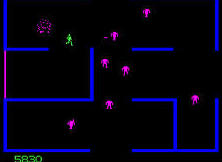
Berzerk  (you might want an external sample file)1980Berzerk
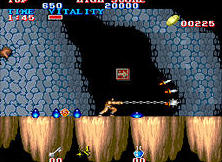
Black Tiger1987Black Tiger
Blast Off1989Blast Off
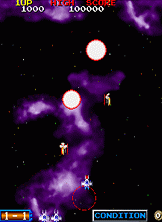
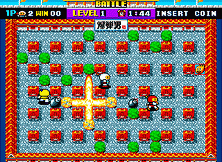
Bomberman1992Bomberman
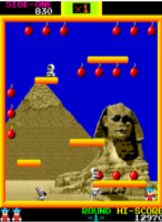
Bombjack1984Bombjack
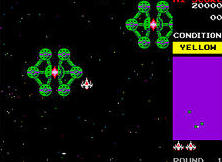
Bosconian1981Bosconian
Bradley Trainer1981Atari Bradley Trainer
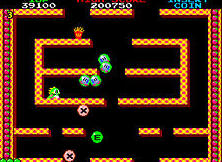
Bubble Bobble1986Bubble Bobble
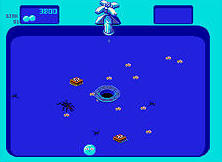
Bubbles1982Bubbles
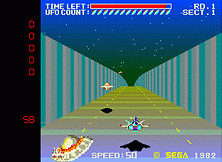
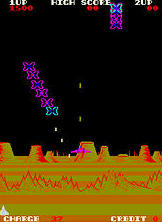
Buck Roger: Planet Of Zoom  (you might want an external sample file)1982Buck Roger
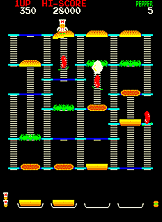
Burger Time1982Burger Time
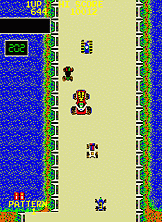
Burning Rubber1982Burning Rubber
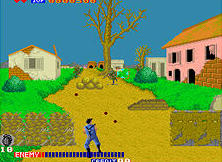
Cabal1988Cabal
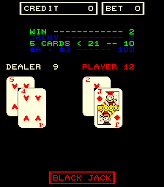
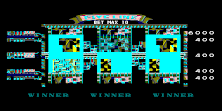
Royal Casino1985Carnival
Carnival1980Carnival
Slot Carnival1985Carnival
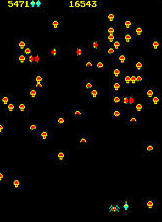
Centipede1980Centipede
Cosmic Guerilla  (you might want an external sample file)1979Cosmic Guerilla
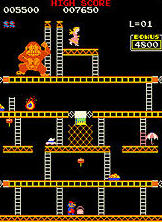
Crazy Kong (bootleg of Donkey Kong)1981Crazy Kong
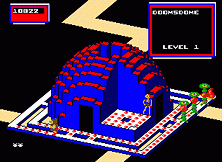
Crystal Castles1983Crystal Castles
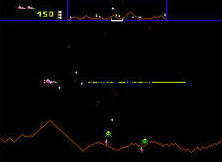
Defender1980Defender
Daytona USA1994Daytona USA
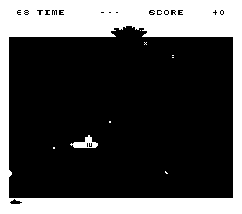
Depthcharge  (you might want an external sample file)1977Depthcharge
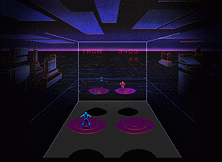
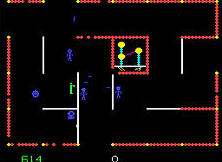
Disks of Tron1983Disk of Tron

I am 59 years old. Decades have passed since I discovered MAME in late 1997. The acronym stands for Multiple Arcade Machine Emulator When video game files for arcade games spread over several other fan pages I also decided to create this page in the year 2000. Because I couldn't find any fan page having screenshots or photos of the games at this time. Might have been around the year 1998 when nostaligia kicked in and I suddenly felt the urge to play Galaxians and Galaga again after decades. Some enthusiast wrote simulations of these games but they were far from the orginals. On a phone call with a friend I asked him if he knew better versions of theses games and he asked if I ever heard of MAME. That's how it all started. Was happy as can be.

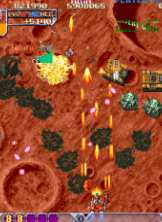
Dodonpachi  Misses other rom to work1997Dondopachi
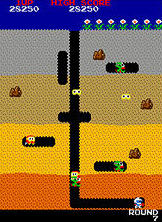
Dig Dug  Needs namco51 and namco52 and namco53 1982Dig Dug
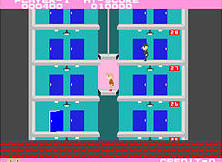
Elevator Action1983Elevator Action
Exerion1983Exerion
Frenzy1981Frenzy
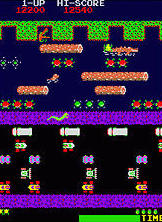
Frogger1981Frogger

Did you know, that some versions of the emulator have a network option, enabling two or more players in the LAN or even the internet to play together? Candidats are Fightcade and Kaillera, while MAME itself seems not to support network play. Setup should be easy enough in your LAN. For WAN on the other hand, for example via a cable internet connection, at least the user of the "master" computer (the other - client - connects to) must know his or her public IP address. This article describes the problem, offers a solution and also reveals the user's public IP address. The master then just starts the emuator and enables the networking play option and tells the client(s) his or her public IP.

  
I am on Facebook
Social networks


If you like my work I would appreciate a donation
PayPal button
Flag Counter

since June 5th 2013
Advertise with us
Check My Site on ScamAdviser.com