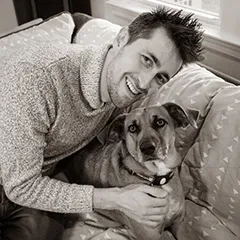
Location Boston, MA
Interests Programming, Photography, Cooking, Game Development, Reading, Guitar, Running, Travel, Never having enough time...
Working On fusion energy at CFS
This Site Made with Astro, Cloudinary , and many many hours of writing, styling, editing, breaking things , fixing things, and hoping it all works out.
Education B.S. Computer Science, New Mexico Tech
Contact site at dillonshook dot com
Random Read another random indie blog on the interweb
Subscribe Get the inside scoop and $10 off any print!
Demon Boy Saga Version 0.70a Apr 2026
At the center of the Saga is an archetypal figure with a twist. The “demon boy” is not a caricature of evil nor a simple outcast; he is a site of negotiation between inherited labels and a self that insists on other vocabularies. He is at once frightful and tender, capable of violence and capable of tenderness, which makes him a trenchant mirror for readers: we watch not a monster perform wickedness but a young consciousness discovering moral grammar in a world already primed to teach him how to be monstrous. Version 0.70A keeps him half-outlined—enough to care, not so much that wonder is arrested. This deliberate incompletion invites empathy tempered with unease, the exact emotional friction the Saga wants.
Stylistically, Version 0.70A favors voice over exposition. The prose tends toward kinetic fragments—snapshots, overheard lines, half-thought internal monologues—that communicate immediacy. This approach mirrors the protagonist’s inner condition: a consciousness assembling itself from scraps. It’s an effective stratagem: rather than telling us what the demon boy is, the Saga lets us piece his humanity together through interactions, contradictions, and the residues of memory. In these elliptical passages there is room for the reader’s own imaginative labor. The Saga trusts us to complete the shapes it offers, making the reading an act of collaboration rather than passive ingestion. Demon Boy Saga Version 0.70A
If the Saga has flaws in this draft, they are mostly of emphasis. The elliptical style occasionally hardens into obfuscation, withholding too much context at times and risking frustration. Also, the ensemble cast’s competing arcs sometimes leave some threads underresolved—perhaps a conscious strategy to be pursued in later versions, but still worth noting. Yet these are not fatal; they are the trade-offs of aesthetic choices that privilege rhythm and affect over exhaustive mapping. At the center of the Saga is an