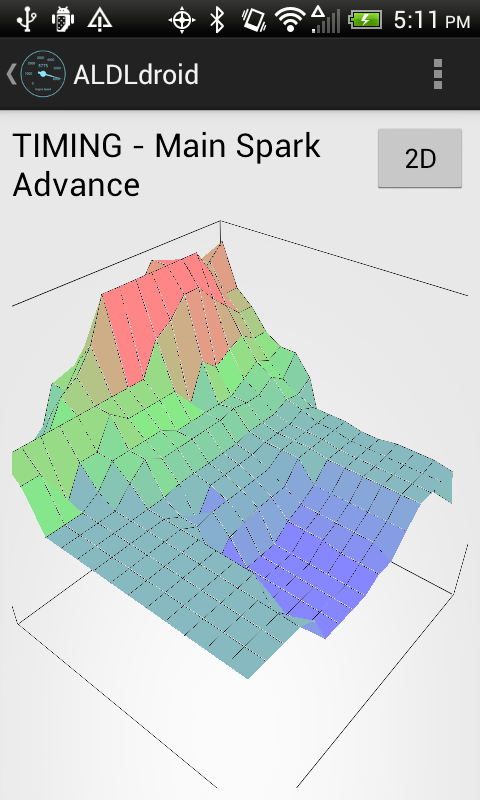
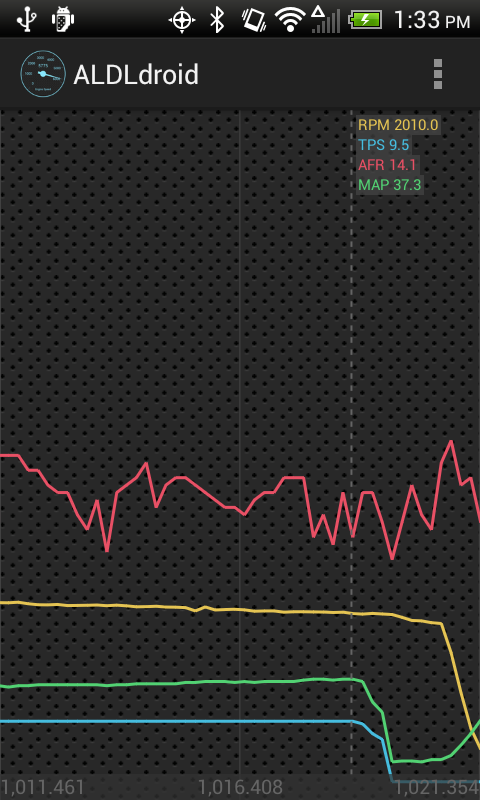
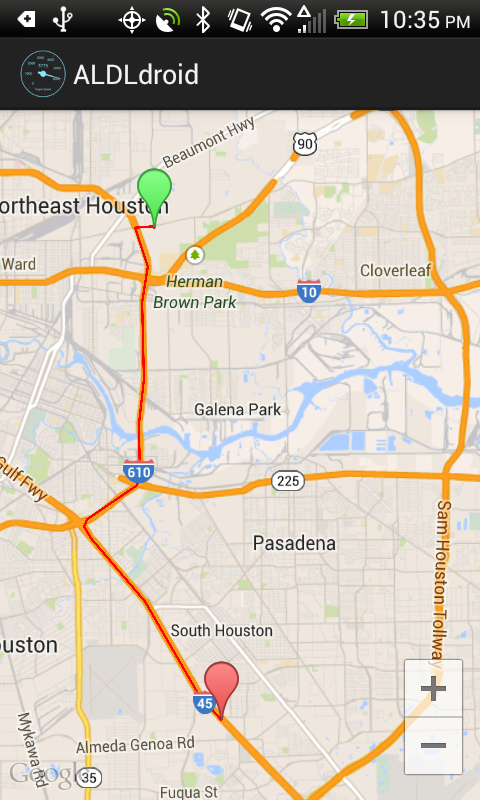
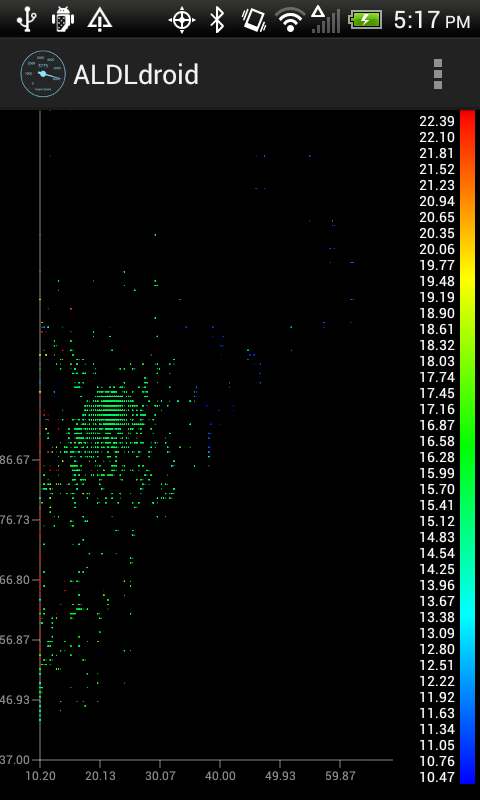
While the application was first developed for GM OBD-I ECUs, it uses a very flexible way of parsing ECU data stream that has proven useful to a lot of other car enthusiasts such as owners of BMW, Ford, DSM (Mitsubishi), Porsche, etc. The application also includes a complete tuning interface as well as data log file viewers which are in the form of time series, maps and scatter plots.
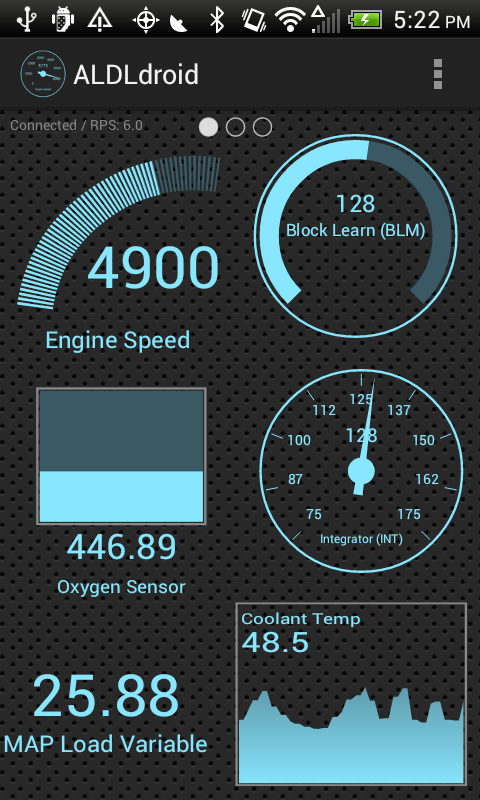
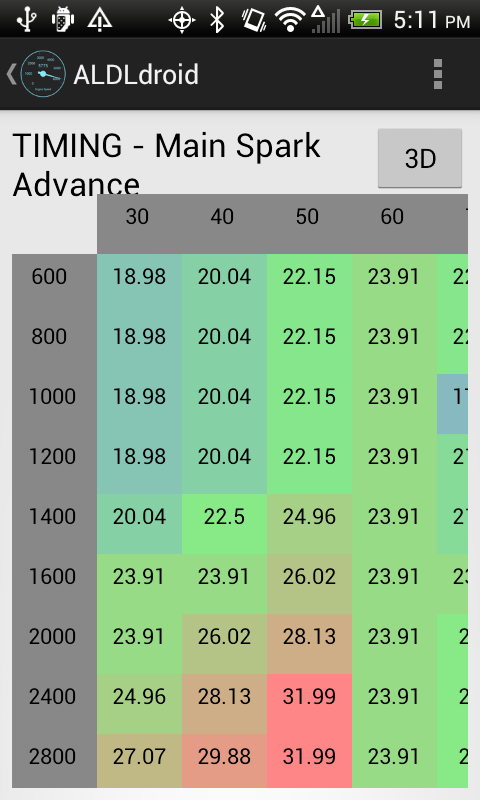
Learn More Download NowThe application has three big components: dashboards where data coming from the ECU can be displayed in various formats, a tuning section and data log file viewers.
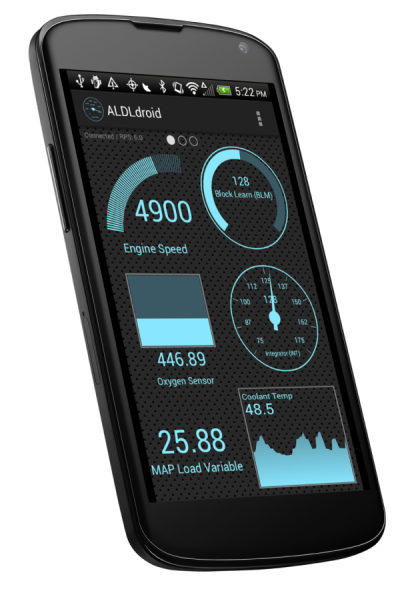
Customize the dashboards with any indicators you want to see
Android sensors on your device are used to display useful GPS geolocation data (including speed) as well as triple axis accelerometer data (including g-force)
Display the app in your windshield to see it at a glance
Look at the data you just data logged on your phone or tablet using the build-in time series, maps or scatter plot log viewers
Tune on the fly using supported real-time tuning hardware or edit a binary file to program a chip later
We try to answer email from our customers as fast as we can, more often than not, we will answer within 24 hours
The application uses ADX and XDF files which are files from TunerPro (Windows software). These files can be found on various sites such as TunerPro Web site itself, GearHead EFI forums as well as your cars enthusiasts forums related to your specific vehicle.
Here is the easy steps that you can follow that will get you going
Find the ADX file for your vehicle. This is often the hardest part. Once your've found it, the rest is easy!
Install the ALDLdroid application from Google Play
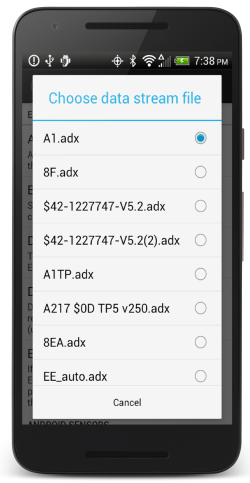
Use the Import Data stream feature of the application to import your ADX file.
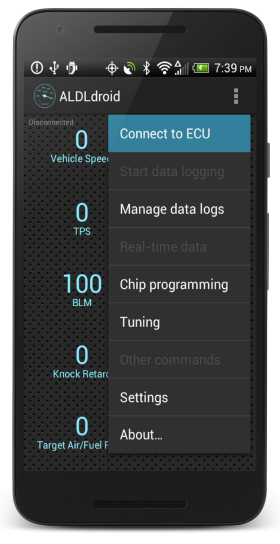
Connect the ALDL cable to your vehicle diagnostic port. Hit the Connect to ECU menu in the application and watch the data come in!
The application supports various hardware that can be wired or connected wirelessly to your Android device. Here is what is currently supported:
Wired connection (USB) and wireless (Bluetooth) are both supported by the app. For Bluetooth, we suggest the Red Devil River adapters (or the 1320 electronics if you can find one used) and for USB, any FTDI (USB chip) based cable will do. :obd2allinone should have what you need.
It is possible to program chip for your ECU using the Moates BURN1 (discontinued), BURN2 as well as AutoProm.
For real-time tuning, the application currently support the Moates hardware as well. That is the Ostrich as well as the AutoProm.
If you ECU is equipped with an NVRAM module for real-time tuning, that is also supported for some ECU. Mainly Australian ECUs at this point and more can be added as required.
Some of the features described above can be seen on the screenshots below.
We love to see what our customers do with our application so here a video of Boosted & Built Garage and his pretty awesome setup.
Mara typed the words into the search bar and watched the algorithm cough up nothing but fragments—fan forums, a mistyped username, a sockpuppet that had vanished. The more she looked, the more the letters rearranged themselves into other things: a name, a warning, the shape of a secret.
When she messaged, the reply arrived three days later, terse and poetical. "You found the receipt." The account’s bio held nothing but an ellipsis and a single link that began with the word danger and ended in a tangle of numbers. Mara clicked.
Mara printed them out and pinned them on her wall. The torn receipt stayed at the center, a talisman for the mystery. At night, she picked at the frayed edge and whispered the unsorted words until they made sense as a vow: to look closer, to read the margins, to fold small, strange messages into her pocket when she found them. The internet, she realized, was not only a ledger of what people wanted others to see; sometimes it was a place people left their private maps—snapshots of being human—and hoped someone would follow. abella danger dangershewrote instagram profile link
She found the phrase on a torn receipt tucked inside a library book: abella danger dangershewrote instagram profile link. It read like a riddle, a breadcrumb left by someone who wanted to be found or forgotten.
What opened wasn’t a profile but a private collection of letters—confessions written to no one and everyone. They were about small betrayals, about the ways people hurt themselves while protecting others, about a woman named Abella who’d learned to sign her name like an apology. There was humor threaded through the sorrow, a fierce, bracing honesty that made Mara's chest ache. Mara typed the words into the search bar
Weeks later she received another message from the account: "Take care." No signature, no link. Just the same hush she had found in the letters. Mara breathed out and let the silence do its work. The receipt remained, the fragments gathered, and in the space between posts she felt less alone—because danger, she decided, could be a name and it could be the warning someone left so you’d pay attention.
She didn’t know if Abella was real. Maybe she was a persona stitched together from strangers’ loose threads. Maybe the account was a performance piece or a map of scars. But the letters were alive with human light: a grocery list that read like grief, a postcard of a dead star, a recipe for stew and forgiveness. "You found the receipt
For three nights she worked the trail. She scrolled through archived posts, old comments, cached pages that smelled faintly of the internet’s attic. Every dead end felt like a closed door until, when the city was thin with rain, she found a pattern in the silence: an outer account posting tiny, stubborn notes—one-line poems, a photograph of a shuttered cafe, a palm of a hand—always with the same shuffled words in the caption.
Subscribe to our email newsletter for useful tips and resources.
Copyright 2026 ALDLdroid. All Rights Reserved.